
Last updated November 25, 2026
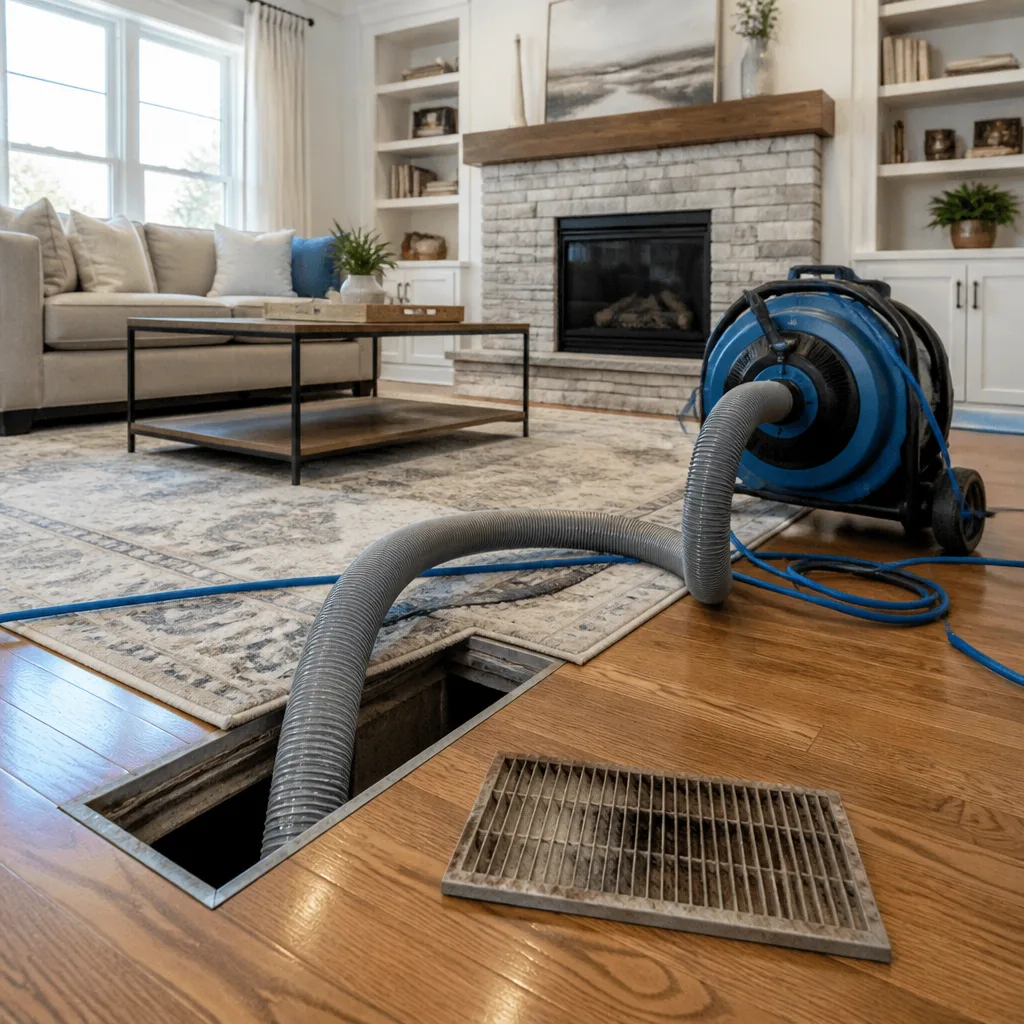 Whole-home duct cleaning
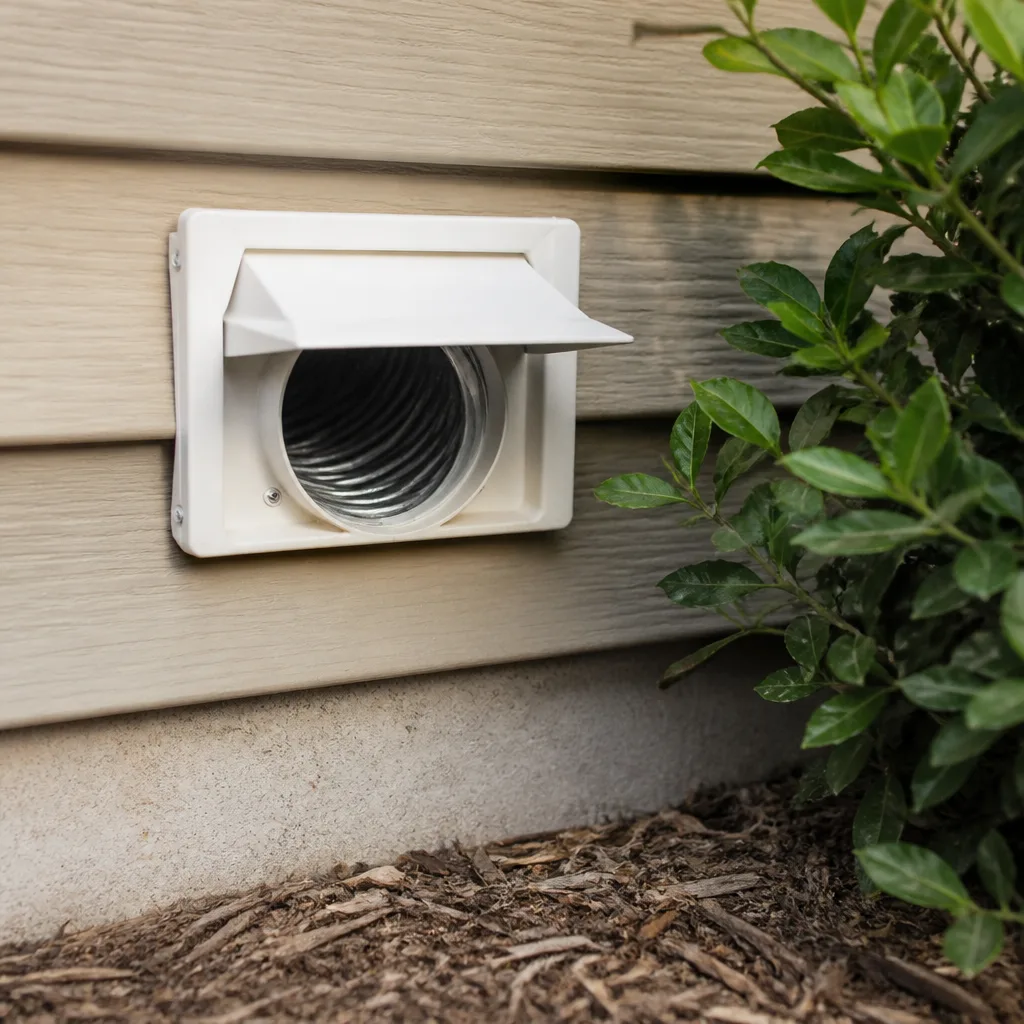 Dryer vent cleaning
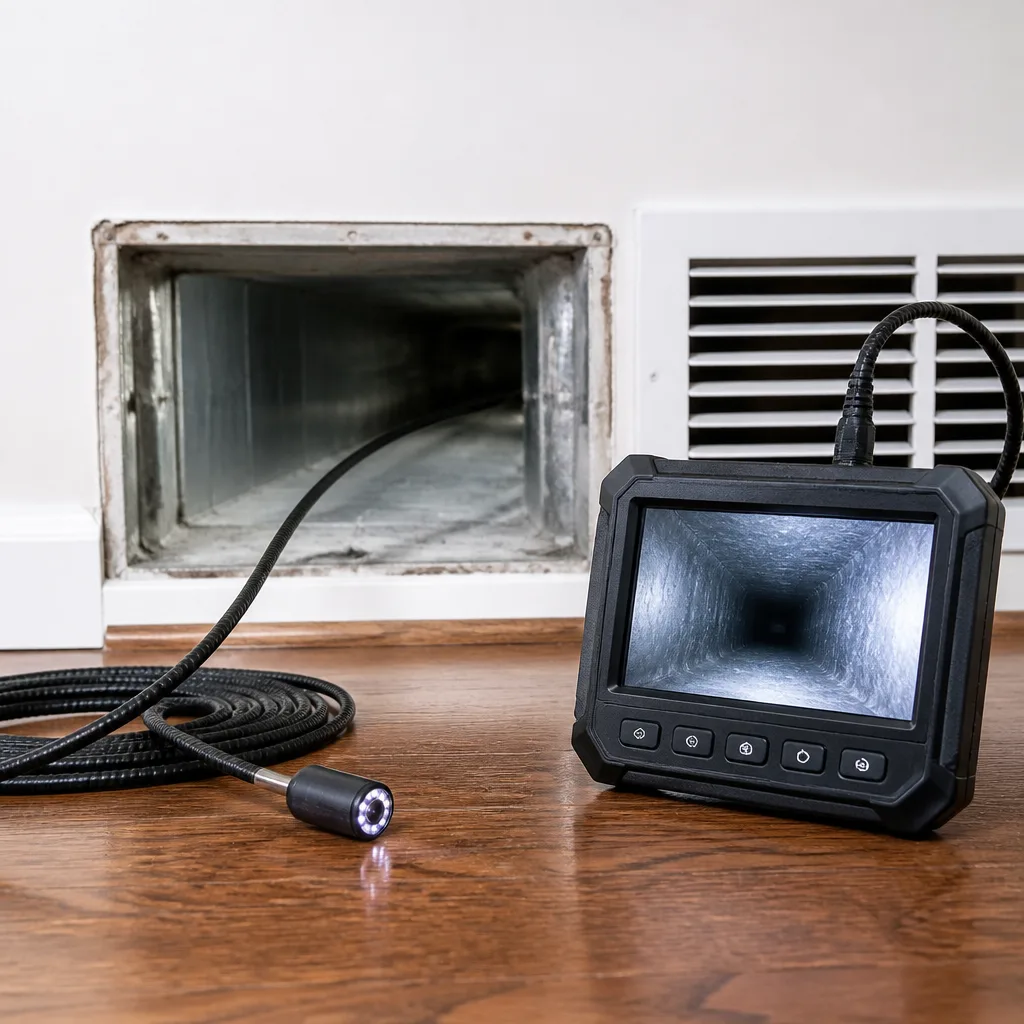 Camera inspection
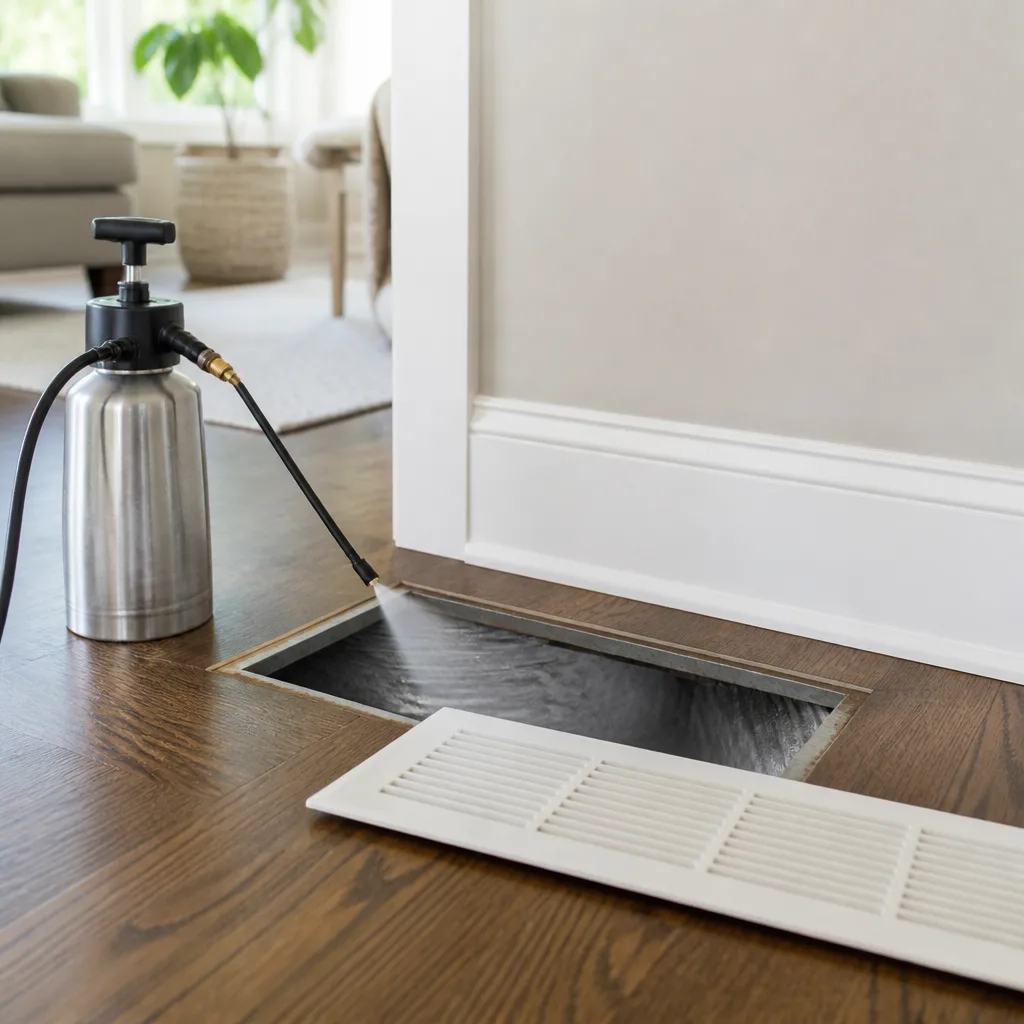 Sanitizing & deodorizing
Whole-system duct and dryer vent check with before-and-after photos - you see exactly what came out of your vents
That "$99 whole-house special" is a bait ad - the real number appears once they are in your hallway, or the "clean" is a shop-vac at the register. We photograph the inside of your ducts before and after instead.
Air Duct Cleaning Troubleshooting in Preston Hollow: Common Problems and How to Fix Them
If your “just cleaned” ducts are still pushing weak airflow to the back bedrooms, the ductwork was never the problem. Your system has a pressure leak that no brush attachment will touch. Most homeowners in Preston Hollow assume weak airflow, musty smells, and dust on the furniture mean the ducts are dirty. Often they don’t. Those symptoms usually trace back to a failed seal, a crushed flex run, or a return that’s pulling air from the wrong place. This guide helps you tell the difference before you spend money on a cleaning that can’t solve your problem. We’ll walk through the checks you can do yourself and the repairs that actually fix the issue.
Quick Answer
Most air duct problems in Preston Hollow aren’t caused by dirt. They’re caused by pressure imbalances, unsealed joints, or collapsed flex duct that a vacuum alone will never correct. Diagnose the mechanical failure first, then decide whether your system needs cleaning, sealing, repair, or all three.
Styles & brands we work with
- Whole-home duct cleaning
- Dryer vent cleaning
- Camera inspection
- Sanitizing & deodorizing
Table of Contents
- Contamination vs. Mechanical Failure: How to Tell the Difference
- Why Pressure Imbalance Beats Dirty Ducts as a Diagnosis
- What a Collapsed Flex Duct Looks and Sounds Like
- How Duct Leakage Sends Dirt Right Back Into Your System
- Reading Your HVAC Filter as a Diagnostic Tool
- Step-by-Step: Diagnosing Your Duct Problem at Home
- When Repair and Sealing Must Come Before Cleaning
- When to Call a Professional
Contamination vs. Mechanical Failure: How to Tell the Difference
The first troubleshooting step in any Preston Hollow home is deciding which problem you actually have. A contamination problem means debris, dust, or biological growth has built up inside the duct system. A mechanical failure means the ductwork itself is damaged, disconnected, or leaking. They feel similar to a homeowner but need entirely different fixes.
Contamination problems tend to show up as visible evidence. Mechanical failures tend to show up as performance problems.
Signs of a contamination problem:
- A musty or stale smell that gets stronger when the system first kicks on
- Visible dust or dark streaks around the supply registers
- Dust settling on surfaces faster than normal after cleaning the house
- Allergy-type symptoms that worsen indoors, especially in rooms closest to the air handler
Signs of a mechanical failure:
- Weak airflow at registers in some rooms but not others
- Rooms that never quite reach the thermostat setting
- Temperature swings between the front of the house and the back bedrooms
- Whistling or whooshing noises at registers or near the air handler
- A filter that loads up unevenly or far faster than it should
Preston Hollow homes with established ductwork often show both problems at once. Dust accumulates in a dirty system, and then a leaking joint pulls in attic air and adds to the problem. That’s why a proper diagnosis comes before any cleaning. If your evidence points mostly to the second list, the ductwork needs inspection and repair before a single brush goes in.
Why Pressure Imbalance Beats Dirty Ducts as a Diagnosis
Pressure imbalance is the most overlooked cause of duct complaints in Preston Hollow, and it’s rarely a dirt problem. Your HVAC system is a loop. It pushes air out through supply ducts and pulls it back through return ducts. If the supply and return sizes don’t match, if a return is restricted, or if a duct leaks, the system can’t move the air volume its design called for. The blower runs harder, the rooms get uneven air, and the homeowner blames the ducts.
Here’s what an imbalance often does:
- Weak airflow in distant rooms. Air follows the path of least resistance, so back bedrooms at the end of a long run get starved when a closer joint leaks.
- Return pulling from a dirty source. A leaky return near the attic or a crawl area draws in unfiltered air and distributes it throughout the house.
- Whistling registers. A narrowed or restricted duct forces air through a smaller opening, creating noise and reducing flow.
- Uneven cooling. One side of the house runs cold while the other stays warm, even on mild North Texas days.
You can test for a pressure problem without tools. With the system running, crack a door slightly to a room that feels stale or warm. If the door resists closing or swings on its own, that room is under negative or positive pressure from a duct imbalance. Another check: feel the airflow at each register in the house with a sheet of tissue. If a few registers move it easily and others barely move it, you have a distribution problem, not just a dirt problem. That finding changes the whole plan. Cleaning contaminated ducts is still worthwhile, but it won’t rebalance a system that’s leaking air.
What a Collapsed Flex Duct Looks and Sounds Like
A collapsed flex duct is one of the most misdiagnosed problems we see in Preston Hollow, and a discount cleaner with a vacuum will never catch it. Flex duct is the flexible, insulated hose-style duct commonly used to connect the main trunk to individual registers. When it’s installed with a sharp bend, crushed by attic traffic, or pinched between framing, the inner liner flattens. Airflow drops. From inside the house, it looks like a dirty-duct symptom.
Here’s what to watch for:
- One room, not all rooms. A collapsed run usually affects a single register or a small zone, while the rest of the system moves air fine.
- Whistling or hissing at that register. The narrowed path forces air through a smaller opening.
- A register that moves almost no air even after a cleaning or filter change.
- A visible crimp or kink in the exposed flex duct near the air handler or at the register boot in a garage or attic access.
You can often spot the problem yourself without climbing into the attic. Pop open the register cover in the affected room and look at the duct connection behind it. If the liner looks pinched, crushed, or separated from the boot, cleaning won’t fix it. The run needs to be reconnected, straightened, or replaced. In our experience, a homeowner who reports “the office is always warmer than the rest of the house” is describing a collapsed or disconnected flex run far more often than a dirty duct. This is why diagnosis has to come before any brush touches the system.
How Duct Leakage Sends Dirt Right Back Into Your System
Duct leakage is the reason a cleaning can seem to “wear off” in just a few months. Unsealed joints, gaps at register boots, and loose connections let air escape from the duct into the attic or crawl space. That’s the supply side leaking out. On the return side, the same leaks work in reverse. They suck unfiltered air from the attic or crawl area straight into your system. The filter never sees it. Attic debris, insulation fibers, and dust ride straight into the ductwork and the air handler.
Picture a system that was professionally cleaned and then sealed. The sealed joints stop pulling attic air, so the ducts stay clean for years. Now picture the same system cleaned but not sealed. The return still pulls attic air. The ducts look clean for a short while and then load up again. The homeowner assumes the cleaning was a poor job, when really the mechanical leak was never addressed.
Duct leakage also costs you in efficiency. Air you’ve paid to cool or heat escapes before it reaches a register. In a Preston Hollow home with ductwork running through a hot attic, those losses add up quickly. Sealing the system and cleaning it in the same visit is the way to break the cycle. That’s why Air Duct Cleaning Preston Hollow treats cleaning, repair, and sealing as one job rather than three separate errands for the homeowner.
Reading Your HVAC Filter as a Diagnostic Tool
Your HVAC filter is one of the best diagnostic tools you already have, and most homeowners ignore what it’s telling them. The rate at which the filter loads up says a lot about duct integrity. A filter that clogs in a few weeks is often pulling in unfiltered air from a leak. A filter that stays clean for months, paired with dusty registers, points to a bypass or a return that isn’t drawing from the living space at all.
Here’s how to read the signal:
- Change the filter and note the date. Write it on the filter edge with a marker.
- Check it in the same number of weeks every time. Pick an interval and stick to it, so you’re comparing like with like.
- Look at how it loaded. A filter that’s dark on one side or clogged in one corner suggests air is entering from an uneven source, often a leak.
- Look at how fast it loaded. If the filter is heavily loaded well before the interval you expect, the system is pulling in air from somewhere it shouldn’t.
- Compare against the registers. If the filter is dirty and the registers are dirty, the debris is entering the system. If the filter is dirty but the registers are clean, the source may be a return-side leak.
A filter loading quickly isn’t proof of anything by itself, but it’s a strong hint. Combined with uneven room temperatures or a whistling register, it points toward duct leakage or a disconnected run. That’s the point where a professional inspection with a manometer and a duct blaster earns its cost. Our technicians have up to 12 years of experience reading these signals, and the reading usually points to a mechanical fix, not just a cleaning.
Step-by-Step: Diagnosing Your Duct Problem at Home
Before you call anyone, a few simple checks can tell you a lot about what your system needs. None of them require tools beyond what’s already in your house. Work through this list in order and note what you find.
- Test airflow room by room. Hold a sheet of tissue in front of each supply register with the system running. Note which registers move it strongly, weakly, or not at all. The pattern tells you whether you have a whole-system issue or a single-run problem.
- Listen for noise. Walk through the house and note where you hear whistling, whooshing, or rattling. Noise at one register points to a restriction there. Noise at the air handler points to a blower or return issue.
- Smell the air on startup. Musty odors that appear only when the system starts point to contamination. Odors present all the time point to something else, such as a moisture source or a leak drawing in outside air.
- Inspect the filter. Note the filter type, the date it was changed, and how it loaded. Use the readings to judge whether the system is drawing unfiltered air.
- Check for visible gaps. Open the register covers in a few rooms and look at the duct connections. Look for gaps at the boot, separated tape, or a crushed liner.
- Test interior door pressure. Crack a door to a warm or stale room. If it swings or resists, the room is under pressure from a duct imbalance.
- Look at the return. Find your return grille and check whether the filter is seated properly and whether the grille is blocked by furniture, rugs, or paint.
Write down what you find and where. That record is what a technician needs to make the right call. If your findings point to debris and odor only, a scheduled air duct cleaning is likely the fix. If they point to airflow and temperature issues, ask for an inspection of the ductwork itself before any cleaning is booked.
When Repair and Sealing Must Come Before Cleaning
Some findings mean cleaning has to wait, or at least come second. If the duct system is leaking, damaged, or disconnected, cleaning it first wastes money. You’ll pay for a clean system and then watch it load up again within a few months, because the leak is still there pulling debris back in. The repair comes first, then the cleaning, then the sanitizing if contamination was present.
Here’s when repair and sealing should come first:
- A disconnected flex run. If a duct has come off its boot or trunk collar, cleaning the run does nothing until it’s reconnected.
- Crushed or collapsed duct. A flattened run has to be straightened or replaced before airflow returns.
- Widespread joint leakage. Unsealed joints throughout the trunk and branches mean the cleaning won’t stay effective.
- A return pulling from the attic or crawl. That leak brings unfiltered air in every time the system runs.
- Visible gaps at register boots. Gaps between the boot and the drywall leak conditioned air into the wall cavity.
Once the sealing is done, the cleaning makes sense, and the results last. That’s why HVAC cleaning here starts with a look at the ductwork, not with a vacuum. We clean it, seal it, and then sanitize it, so the system is sound before the brushes come out. If a repair is needed, we take care of it instead of handing you a separate list.
Common Mistakes to Avoid
- Assuming weak airflow means dirty ducts. Weak airflow in one or two rooms usually means a collapsed or disconnected run, not accumulated debris. A cleaning won’t fix a duct that isn’t connected.
- Booking a cleaning without an inspection. A discount cleaner who shows up, vacuums, and leaves will never diagnose a pressure leak. Ask what diagnostic steps are included before you book.
- Ignoring the filter loading rate. A filter that clogs too quickly is telling you air is entering from somewhere it shouldn’t. Changing it more often won’t fix the source.
- Skipping the sealing step. Cleaning without sealing means the leak keeps bringing debris back in. Preston Hollow homes with attic duct runs are especially prone to this cycle.
- Trusting a low coupon price. A very low advertised price is often a callback into much larger charges once a technician is on site. Ask for a flat price per system and what it includes before work starts.
- Ignoring the dryer vent. A clogged dryer vent is a separate airflow problem that duct cleaning won’t touch. It deserves its own inspection, and dryer vent cleaning is a scheduled job worth doing on its own merit.
- Cleaning before repairing. If a duct is crushed or disconnected, cleaning it first is money spent on a problem that isn’t fixed.
See the difference
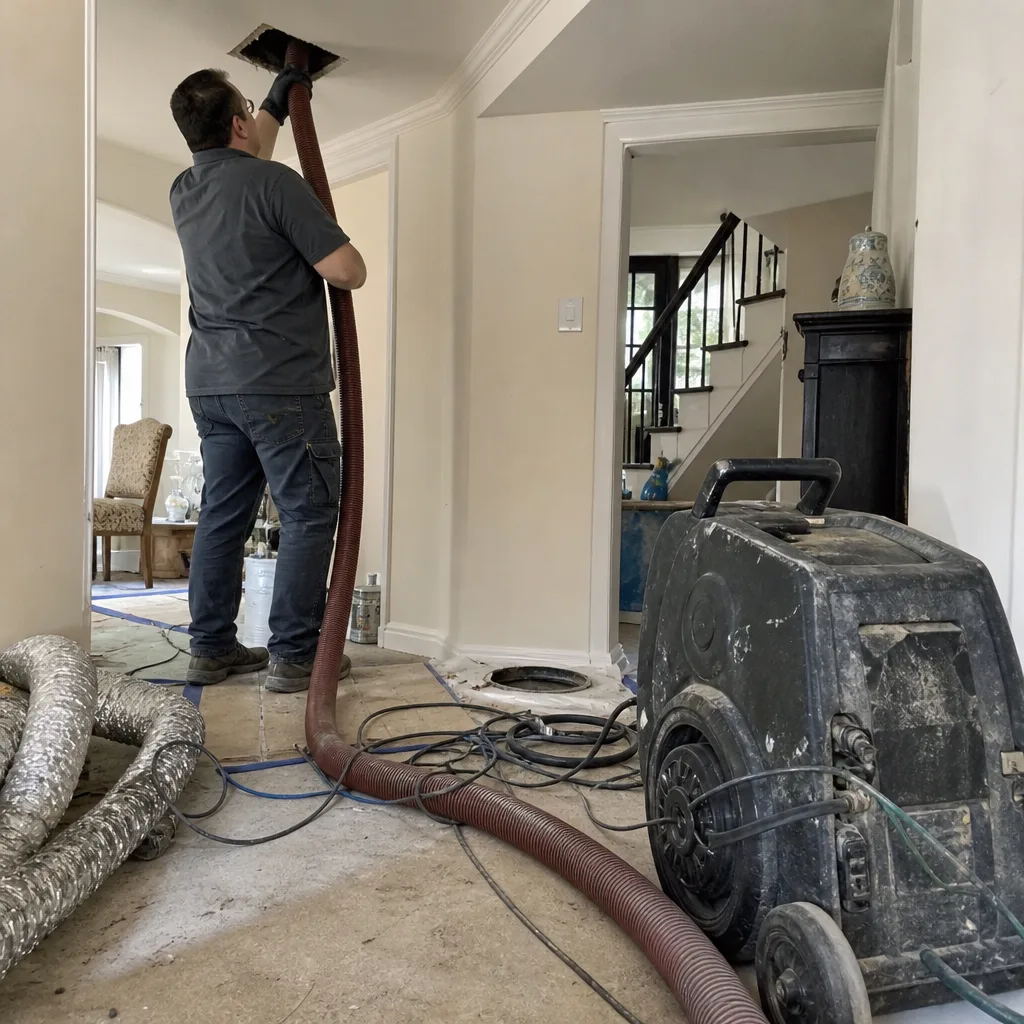 Before
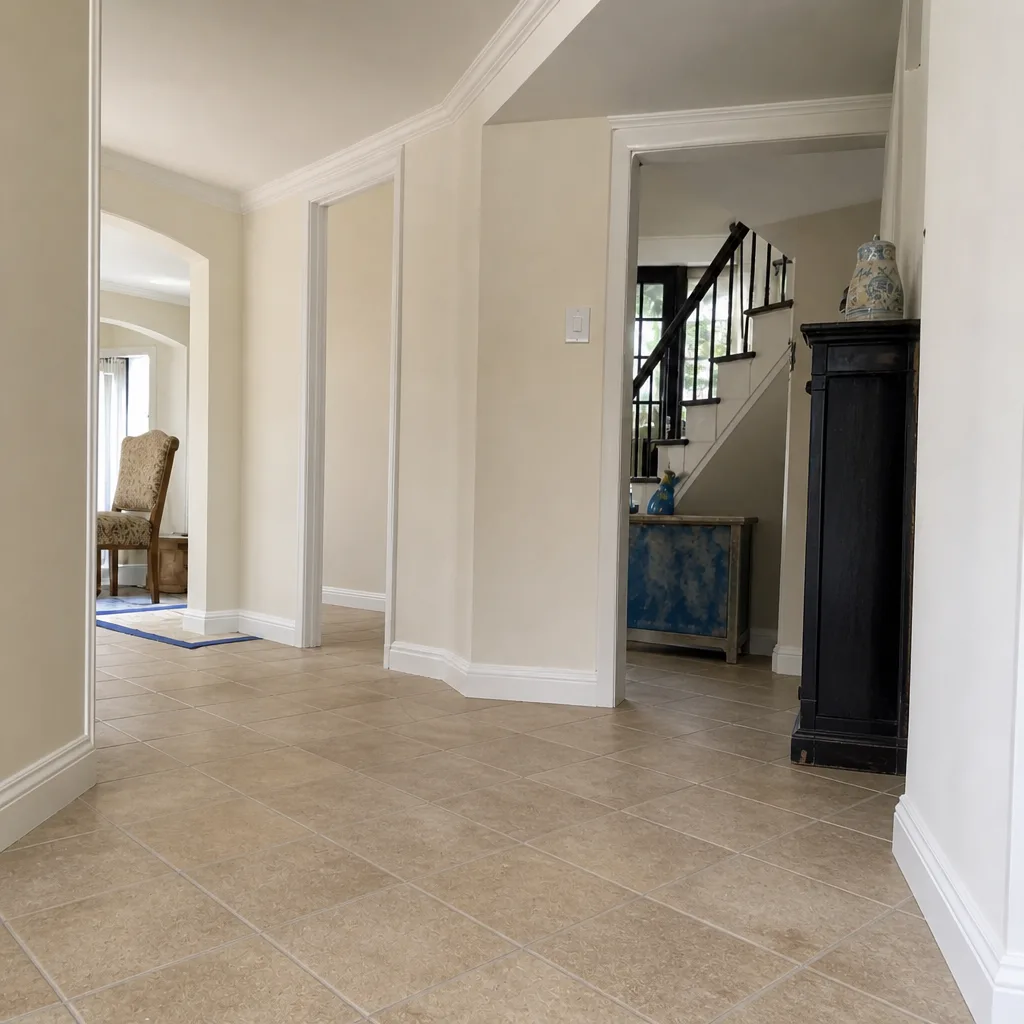 After
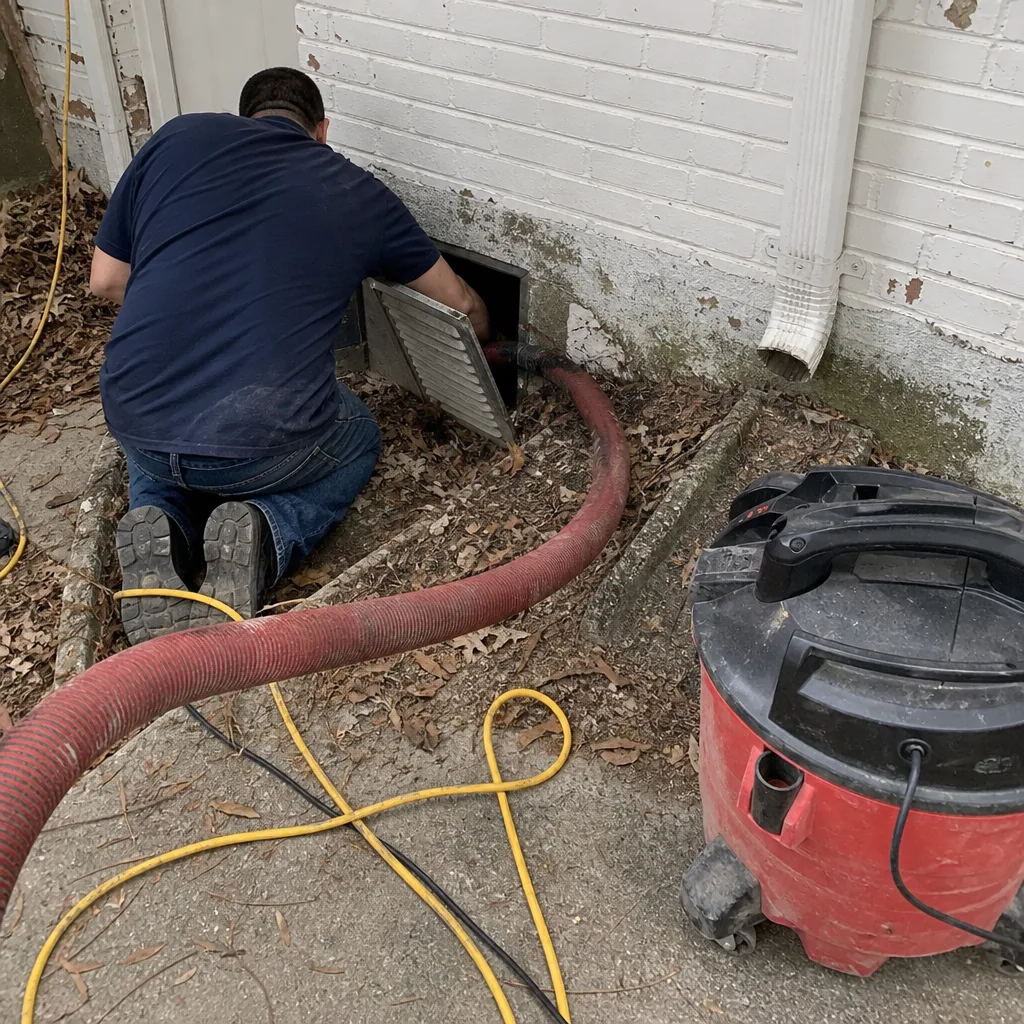 Before
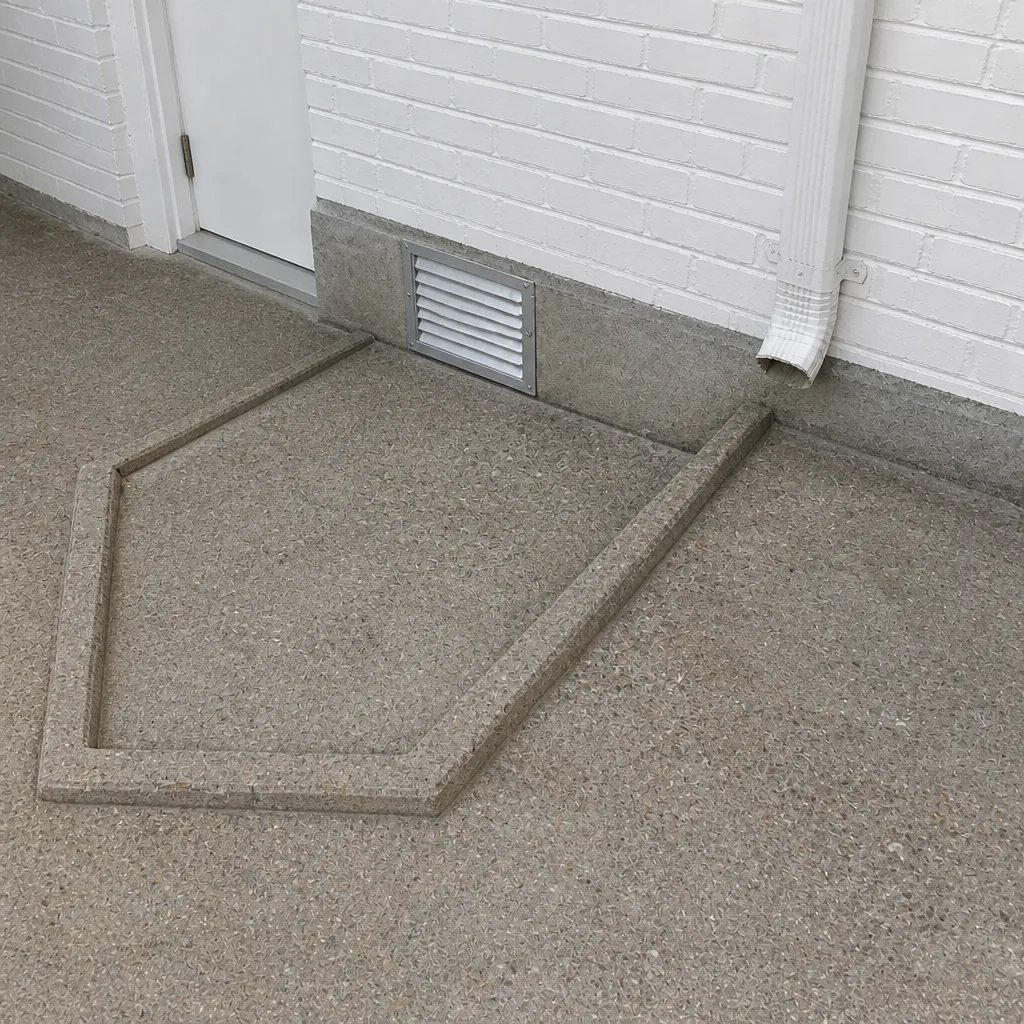 After
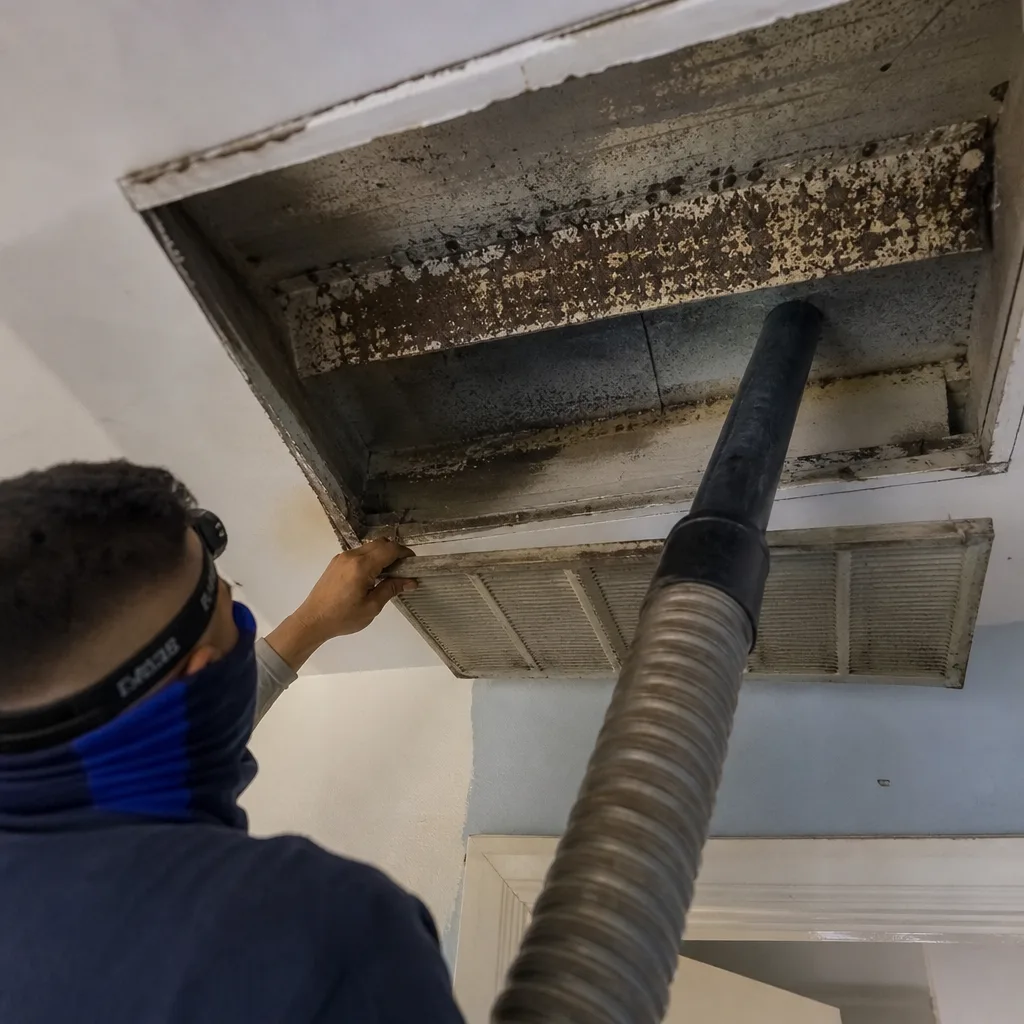 Before
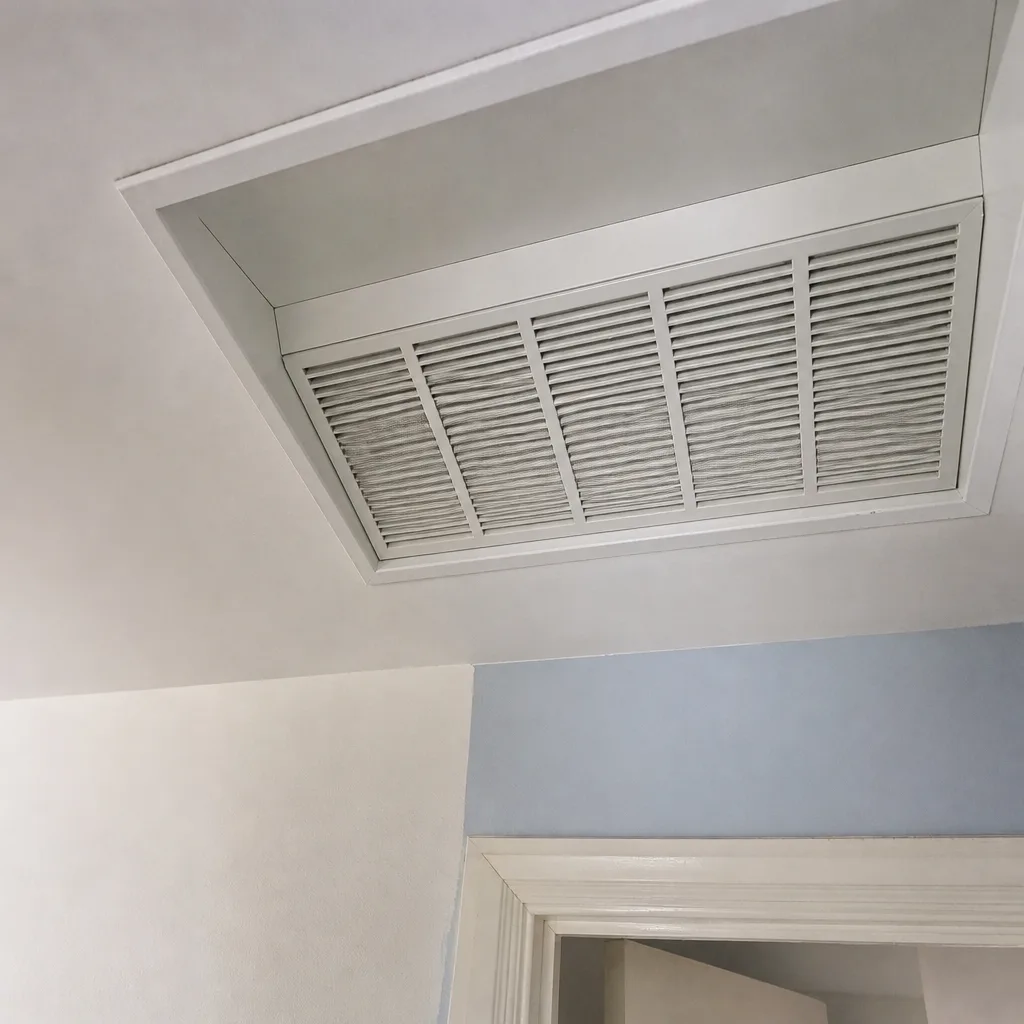 After
When to Call Us
Call when your own checks point to a problem you can’t see from inside the house. That means uneven airflow that doesn’t match your filter schedule, whistling registers that won’t quiet down, musty odors that appear when the system starts, or a room that never warms or cools no matter what the thermostat says. Call if you’ve had the ducts cleaned and the symptoms came back within a few months, or if a contractor has told you that a cleaning alone will solve a pressure or temperature problem. Air Duct Cleaning Preston Hollow offers free estimates in Preston Hollow. Call (833) 513-8108. We answer 24/7. Fast dispatch from 7am to 7pm, Sunday through Friday. We use Rotobrush and Nikro professional duct-cleaning systems, not a residential shop-vac, and we bring Abatement Technologies filtration into the job when the situation calls for containment. The local pro we connect you with is licensed and insured as their state requires, and the work gets a flat price per system before anyone starts.
Frequently Asked Questions
Weak airflow right after a cleaning almost always points to a mechanical problem the cleaning didn’t address, such as a collapsed flex run, a disconnected duct, or a leaky return. A vacuum can’t restore airflow through a crushed or disconnected duct. Call (833) 513-8108 for a free estimate and an inspection that focuses on the ductwork itself.
Dirty ducts don’t create pressure problems, but they can make an existing one worse. Heavy debris narrows the path for air, and a return that’s partially blocked loads the blower harder. The root cause is usually a leak or an imbalance, not the debris itself, which is why cleaning alone often doesn’t fix the complaint.
If you notice weak airflow in some rooms, whistling registers, or rooms that never reach the thermostat setting, you’re dealing with a sealing or repair issue. If the signs are odor, visible debris at the registers, and dust settling faster than normal, it’s contamination. Many Preston Hollow homes need both, and an inspection confirms which comes first. Call (833) 513-8108 for a free estimate.
Most homes do well with a cleaning every few years, and that interval shortens if pets, allergy concerns, or a nearby renovation are adding debris to the system. If your filter loads up faster than expected or odors return quickly, that’s a signal to have the system inspected instead of waiting on a schedule. Call (833) 513-8108 for an exact quote.
A very low quote usually buys a surface vacuum and nothing else. There’s often no diagnosis, no sealing, and no before-and-after photos of your own ducts. The number that matters is a flat price per system, agreed before work starts, from a company using professional equipment and willing to show you the results.
Ask for before-and-after photos of your own ducts, not stock images, and a walkthrough of what was cleaned, sealed, and sanitized. A clear explanation of what was found and what was fixed is the best proof of a real job. Call (833) 513-8108 to schedule a free estimate with a clear written scope of work.
The Bottom Line
The air duct problems most Preston Hollow homeowners bring to us aren’t always dirt problems. Weak airflow, uneven temperatures, and musty odors can come from a collapsed flex run, a leaking return, or a system that’s out of balance. Diagnose the mechanical failure first. Use the tissue test, the filter loading rate, and a quick look at the register connections to figure out what you’re actually dealing with. Then decide whether you need cleaning, sealing, repair, or a combination of all three. When the problem is structural, fix it before you pay for a clean that won’t hold. That’s the difference between a job that lasts and a job that gets redone.
Better air starts inside the ducts, and it starts with knowing what’s wrong.
Written by the team at Air Duct Cleaning Preston Hollow.