
Last updated November 25, 2026
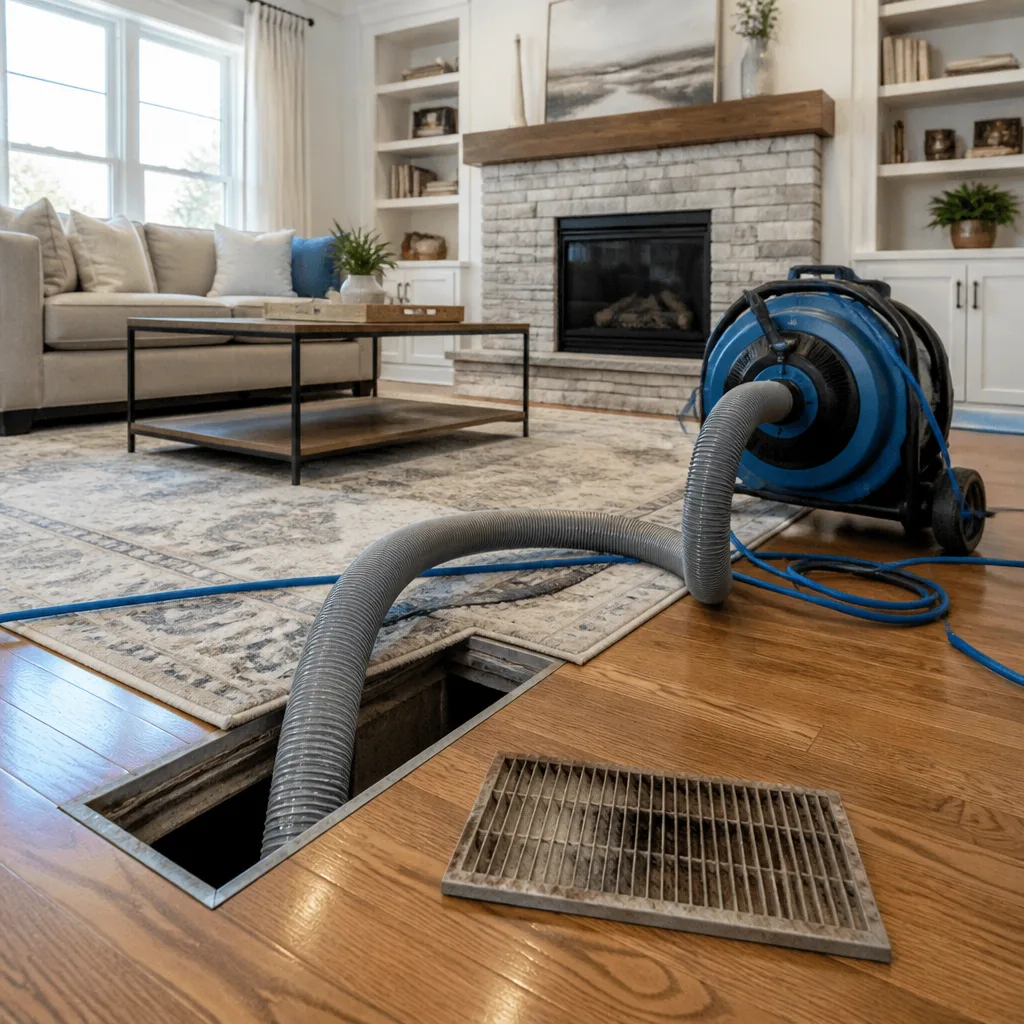 Whole-home duct cleaning
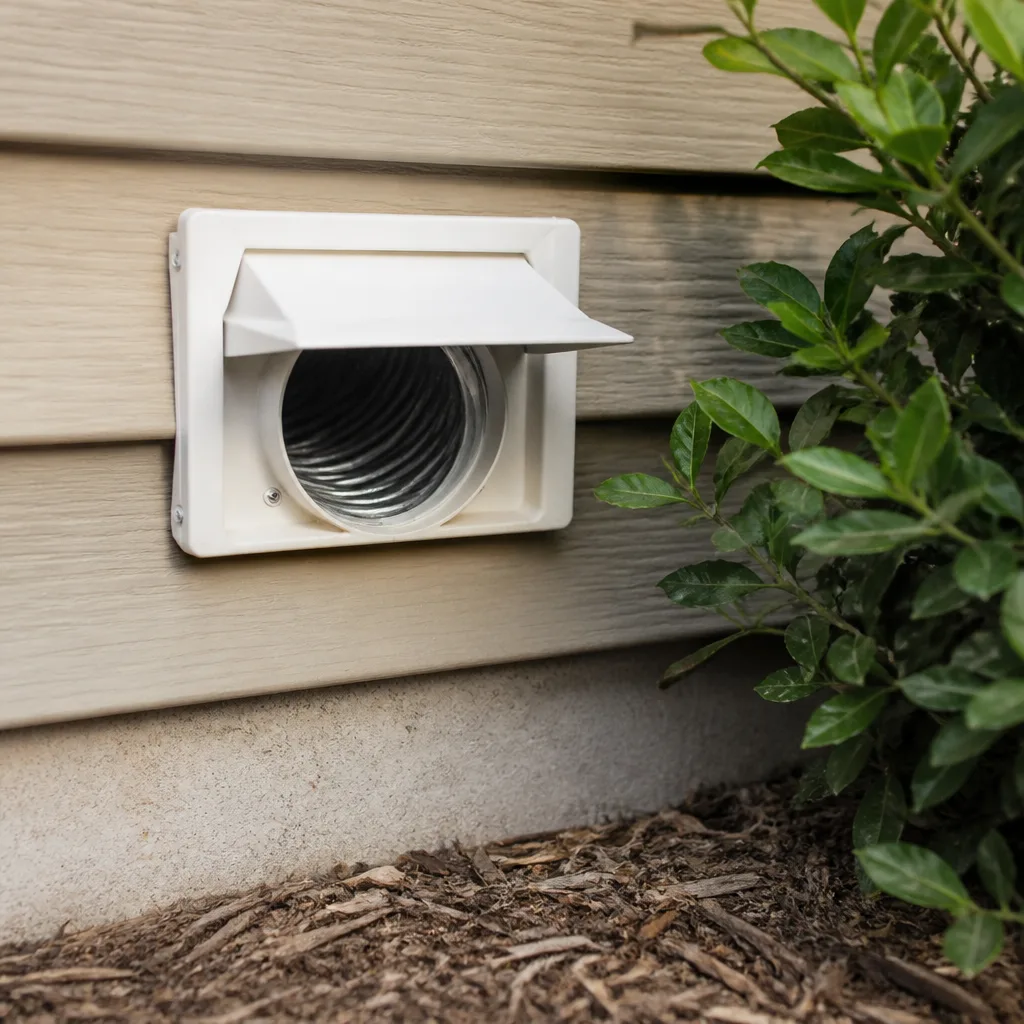 Dryer vent cleaning
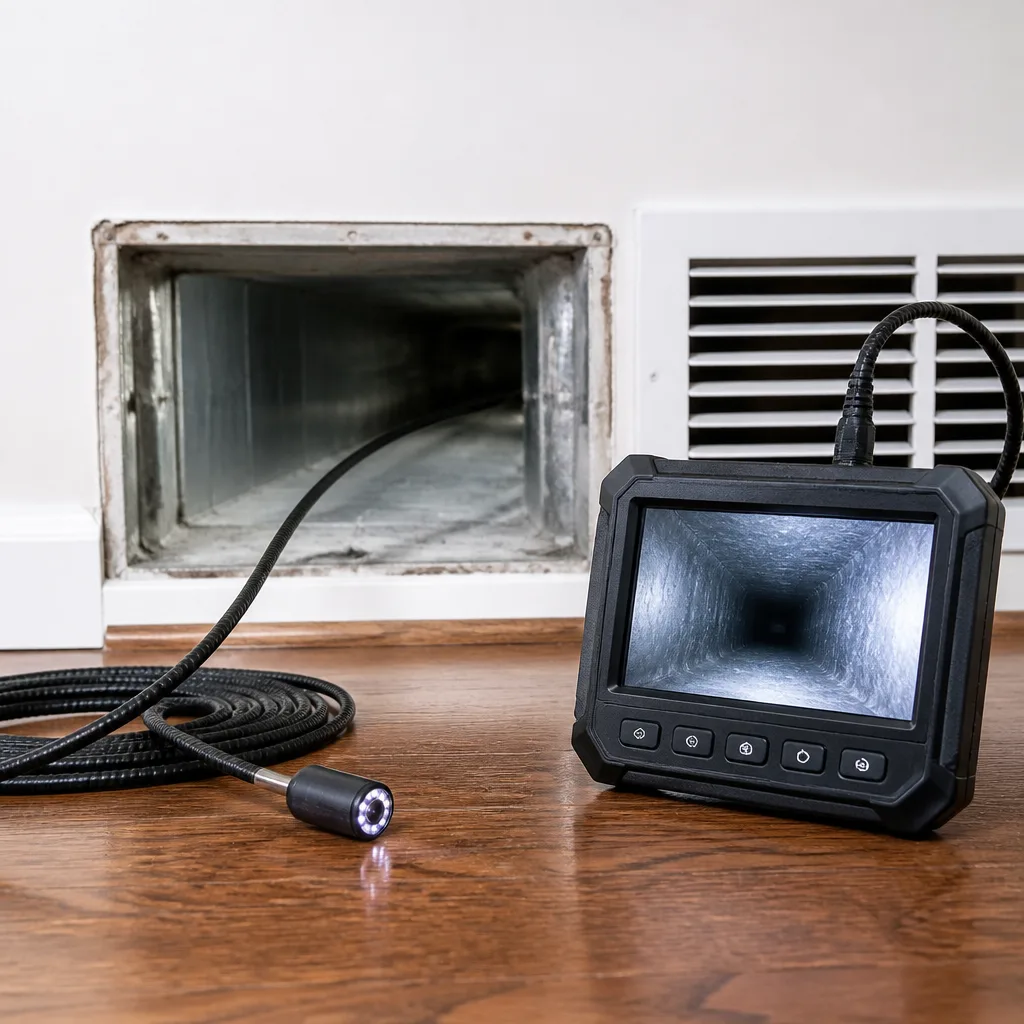 Camera inspection
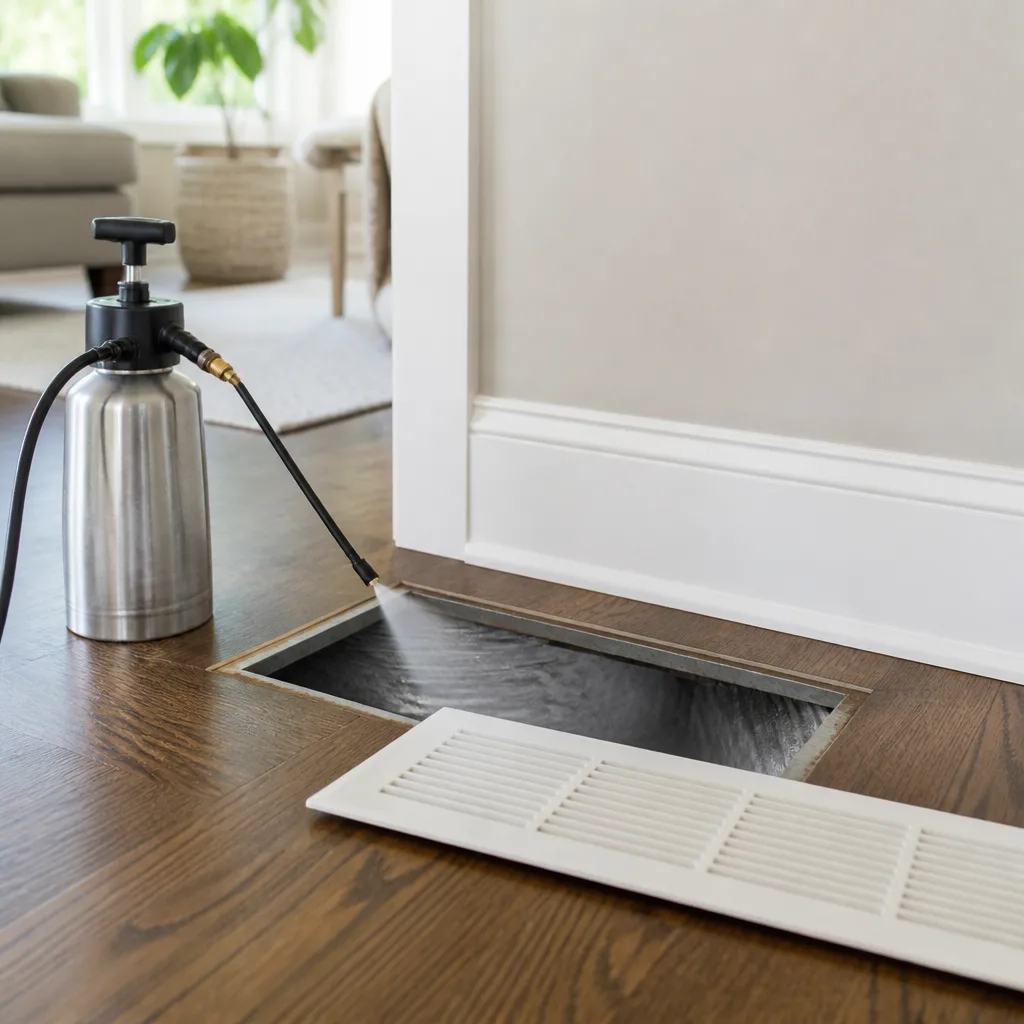 Sanitizing & deodorizing
Whole-system duct and dryer vent check with before-and-after photos - you see exactly what came out of your vents
That "$99 whole-house special" is a bait ad - the real number appears once they are in your hallway, or the "clean" is a shop-vac at the register. We photograph the inside of your ducts before and after instead.
Seasonal Air Duct Cleaning Care for Preston Hollow: Year-Round Homeowner’s Guide
Most homeowners treat duct cleaning as a yearly chore, something to schedule when the vents start looking gray. That’s the wrong frame. In a Preston Hollow home, the ductwork that carried you through February’s cold snaps is the same system that will strain against August humidity, and each season leaves a chemically and biologically different deposit behind. Cleaning once a year means you’re always scrubbing away last season’s problem while this season’s is already settling in. This guide breaks the year into four distinct contamination cycles, explains what each one actually deposits inside your ducts, and shows how to build a cleaning and diagnostic schedule around them instead of against them.
Quick Answer
Year-round duct care in Preston Hollow works best as a four-season protocol rather than an annual event: inspect and diagnose in spring after heating season, control moisture and condensation through the humid summer, clear the heavy particulate load that oak and pecan debris adds each fall, and address the baked-on carbon contaminants that heating mode redistributes every winter. A full professional cleaning typically lands once a year, but the diagnostic and sanitizing steps are timed to the season that created the problem.
Styles & brands we work with
- Whole-home duct cleaning
- Dryer vent cleaning
- Camera inspection
- Sanitizing & deodorizing
Table of Contents
- Why Seasonal Duct Care Beats Annual Duct Cleaning
- Spring: Post-Winter Diagnostics and Moisture Inspection
- Summer: How North Texas Humidity Gets Inside Your Ducts
- Fall: The Oak and Pecan Particulate Load
- Winter: Why Heating Mode Bakes Contaminants Onto Surfaces
- Building Your Year-Round Cleaning Schedule
- What Professional-Grade Equipment Actually Changes
- Common Mistakes to Avoid
Why Seasonal Duct Care Beats Annual Duct Cleaning
An annual cleaning treats every month the same. Your HVAC system doesn’t work that way. In Preston Hollow, the system runs in heating mode through the cool months, flips to cooling for a long humid stretch, then spends weeks pulling in outdoor debris as the canopy drops its leaves. Each mode moves different material through the ducts and deposits it differently.
Annual cleaning usually gets scheduled for a convenient month, not a consequential one. That means the biggest contamination event of the year may sit in your ducts for months before anyone touches it. Seasonal care reverses that. You clean and sanitize when the season that caused the buildup has just ended, so the system enters the next season with a clean slate.
There’s a second reason the seasonal approach matters in older Preston Hollow properties. Duct systems here have often been modified, extended, or reconnected over the lives of the homes, which leaves seams, transitions, and flex runs that collect contamination in specific spots. A diagnostic pass in spring, when the system is between heating and cooling, catches those spots before they become a summer moisture problem.
The practical difference comes down to timing:
- Annual cleaning: one visit, one date, contamination from the previous season sits until the next appointment.
- Seasonal protocol: a spring diagnostic, a summer moisture check, a fall heavy-particulate cleaning, and a winter heating-mode review. The cleaning date follows the contamination, not the calendar.
- Sanitizing timing: placed in late summer, after humidity has driven any micro-growth, so the sanitizer treats the actual problem instead of a clean surface.
When homeowners ask us how often ducts really need cleaning, the honest answer is that the interval depends on what the season deposited, not on a number printed on a flyer. A Preston Hollow home under heavy tree cover needs a different rhythm than one on an open lot. For the basics on what a full cleaning involves, see our air duct cleaning page.
Spring: Post-Winter Diagnostics and Moisture Inspection
Spring is the season to look, not just clean. When heating season ends, the system holds a record of everything the winter did to it: dust that settled on the coil, moisture that pooled in the drain pan, and any micro-growth that started in the damp corners of the air handler while the house was closed up against the cold. A spring diagnostic reads that record before cooling season adds to it.
Three areas deserve the closest look in a Preston Hollow home:
- Drain pan condition. The pan under the indoor coil catches condensate all summer. If it sat through winter with standing water, sediment, or a clogged drain line, that’s the first place biological growth takes hold when humidity returns.
- Coil cleanliness. A dusty evaporator coil loses efficiency and gives contamination a surface to cling to. Spring is when the coil is easiest to inspect and clean, before it’s wet all season.
- Humidity-related micro-growth. Look at the insulation lining the air handler and the first few feet of duct. Any staining, musty odor, or dark spotting points to moisture that developed during heating season and never dried out.
Spring is also the right time to schedule the full-system clean. Our technicians have up to 12 years of experience reading these systems, and they know that a duct that looks fine at the register can hide a contaminated plenum or a disconnected flex run behind it. The full scope of what should be evaluated is covered in our HVAC cleaning guide.
One point worth flagging: if you see visible mold in the air handler or duct lining, don’t spray anything on it yourself. Cleaning and remediation need containment and filtration, and treating a growth problem without either just spreads spores through the house. That’s a job for trained professionals with the right equipment.
Summer: How North Texas Humidity Gets Inside Your Ducts
Summer in Preston Hollow means the air conditioning runs almost without pause, and that’s exactly when duct seams and insulation become a moisture problem. Two things happen at once. Humid outdoor air finds any gap in the return side and gets pulled in. Then that moist air meets 72°F supply air moving through a flex duct in an unconditioned attic that may sit well above 100°F.
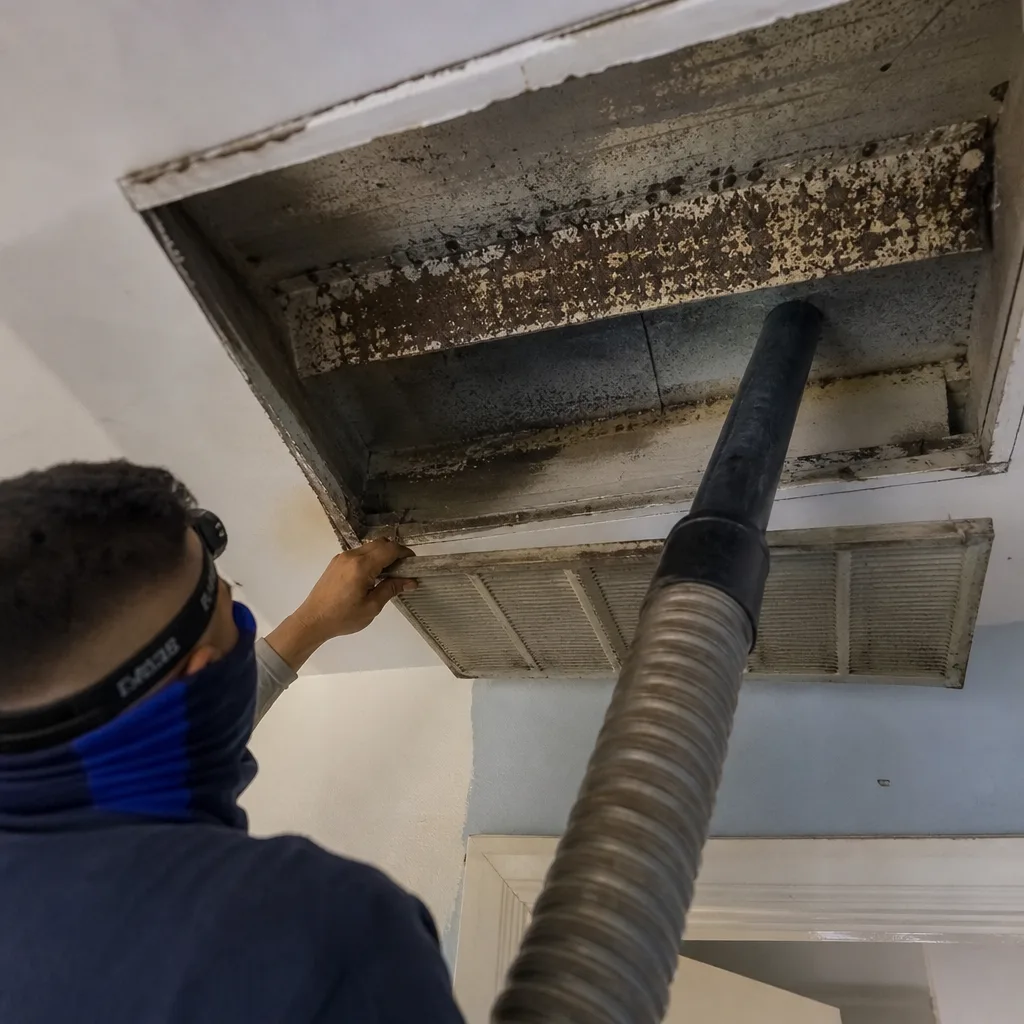
The temperature difference does the damage. The cold inner surface of the duct drops below the dew point of the surrounding attic air, and condensation forms. Flex duct with a compromised vapor barrier or a torn outer jacket condenses on the inside of the insulation, which is the worst place for it. Wet fiberglass insulation, sitting against a cold duct surface all summer, is a growth medium.
What grows in that environment? In our experience, it’s typically the kinds of organisms that thrive in damp, dark, nutrient-rich conditions: mold and mildew species that feed on dust and organic material trapped in the duct lining. The result is a musty smell that gets stronger when the system first starts each cycle, and a system that circulates those particles through every room.
Summer is also when you should watch for these signs:
- A musty or damp odor when the AC kicks on
- Condensation or water stains on duct boots, registers, or the air handler cabinet
- Higher indoor humidity than the system should be delivering
- Visible moisture or dark spotting on flex duct in the attic
Duct sealing is part of the fix. A leaking return pulls in hot, humid attic air all summer; sealing those leaks keeps the humidity where it belongs. Our air duct cleaning Preston Hollow service includes duct repair and sealing alongside cleaning, so leaks get addressed rather than handed to you as a separate to-do. If the system needs filtration or dehumidification help beyond sealing, that’s where certified work with Honeywell and Aprilaire products comes in, bridging a one-time cleaning to ongoing air quality control.
Fall: The Oak and Pecan Particulate Load
Preston Hollow’s mature oak and pecan canopy is one of the things that makes the neighborhood distinctive. It’s also a serious particulate source every fall. When the leaves drop and the trees release pollen, dust, and fine organic debris, that material finds its way into every intake that isn’t properly screened.
Most residential return air intakes use a filter grille. If the filter is the wrong size, sits loose in the frame, or has a gap around the edge, unfiltered air bypasses it completely. Fine leaf debris, pollen, and dust then travel straight into the return duct, the blower, and the coil. In a home under a full canopy, that bypass can defeat the filter almost entirely.
The fall cleaning should focus on:
- Return-side debris. Return ducts collect the bulk of what bypasses the filter. That’s the heaviest load of the year and deserves a dedicated cleaning pass.
- Filter fit. Verify every filter grille is sealed to its frame. A filter that’s the correct nominal size but sits loosely still lets debris past.
- Intake screening. If the system has fresh-air or outdoor-air intakes, check that the screens are intact and insect-grade. Gaps let in leaf particles and insects.
- Blower and coil surfaces. Debris that makes it past the filter accumulates on the blower wheel and coil. Fall is the time to clear it.
Fall is also when you’ll want the dryer vent on your radar. The same organic debris that fills the return ducts finds its way into the dryer exhaust, and the lint load climbs heading into winter. Our dryer vent cleaning service covers that vent as part of the fall maintenance pass.
A cleaning done in fall catches the year’s biggest particulate load before heating season bakes it onto the heat exchanger. That timing is the whole point of the seasonal protocol.
Winter: Why Heating Mode Bakes Contaminants Onto Surfaces
Winter is the season that changes the chemistry of contamination. Cooling mode moves air that’s already been chilled by the coil. Heating mode sends air across a heat exchanger that runs hot, then into ducts that reach temperatures well above room level. Air that passes over that surface deposits whatever it’s carrying, and the heat sets it.
The contaminants that get baked on in winter are predominantly carbon-based: dust cake, skin cells, and pet dander. In cooling mode those particles mostly stay suspended or land as loose dust. In heating mode, dust cake lands on the heat exchanger fins and duct surfaces and gets cured in place by the heat. Once a deposit is heat-set, it no longer behaves like dust. It clings to the surface, and it redistributes through the system as a fine, persistent material every time the blower runs.
That’s why winter isn’t the season to schedule a fresh cleaning if you haven’t done one. Cleaning ducts that are about to receive another load of heat-set material wastes the pass. Instead, the winter work is:
- Change the filter on schedule, and check it more often during heavy heating use.
- Monitor for the smell of hot dust, which is a sign of cake buildup on heat exchanger surfaces.
- Check that the heat exchanger is intact and clean, because baking contaminants onto a cracked or dirty exchanger is a safety and efficiency concern.
- Plan the spring cleaning so it lands at the end of the heating season, when the deposits are at their peak and easiest to remove.
A safety point we won’t skip: if the system uses gas and you smell combustion byproducts or suspect a heat exchanger problem, stop using the system and have it checked by a qualified professional. That’s not a duct cleaning issue, it’s a safety issue, and it needs a licensed technician, not a homeowner with a shop-vac.
If the winter heating run has already deposited a heavy layer of dust cake that your filters can’t handle, the cleaning pass can be scheduled earlier. We answer 24/7 if you need to talk through the situation.
Building Your Year-Round Cleaning Schedule
A workable seasonal schedule front-loads the diagnostic work in spring and places sanitization in late summer, so each step lands after the season that created the problem. Here’s how the year maps out for a typical Preston Hollow home:
- Early spring: Full diagnostic inspection and full-system cleaning. Drain pan, coil, and air handler check. Duct repair and sealing of any leaks found during the inspection.
- Late spring / early summer: Verify return-side sealing and filter fit before humidity climbs. Address any air quality equipment needs (filtration, humidification, ventilation control) so the system is set before the heavy cooling run.
- Late summer: Sanitizing treatment after the peak humidity period, to address any micro-growth that developed during cooling season. This is the one step that has to happen after the problem forms, not before.
- Fall: Return-side cleaning pass to remove the oak and pecan particulate load. Dryer vent cleaning alongside. Filter replacement.
- Winter: Filter monitoring, heat exchanger inspection, and planning the spring cleaning so it lands at the end of the heating season.
That’s two cleaning passes and one sanitizing step spread across the year, plus ongoing filter monitoring. For a home on an open lot, one cleaning pass may be enough. For a home under heavy tree cover, the fall pass is not optional. The schedule adjusts to the neighborhood and the system, not to a fixed interval.
What Professional-Grade Equipment Actually Changes
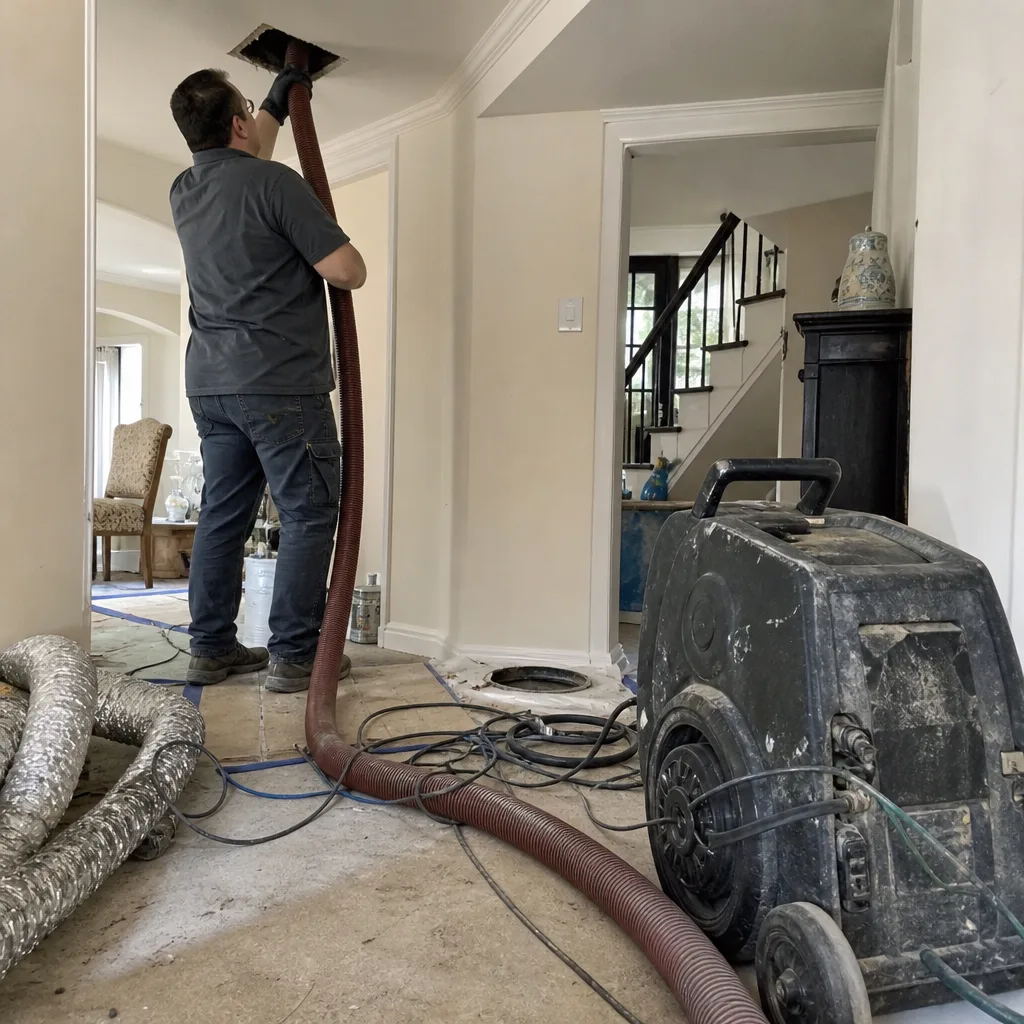
The equipment difference is real and worth explaining plainly. A residential vacuum and brush setup can knock loose dust off the accessible duct surfaces. It can’t reach the full length of a run, it can’t generate the negative pressure to pull debris from every branch, and it can’t do it inside a controlled containment zone. That’s why the results are inconsistent: some dust comes out, the rest gets stirred and redistributed.
Our approach uses Rotobrush and Nikro professional duct cleaning systems, the same platforms used in commercial and restoration work, paired with Abatement Technologies air filtration for containment during the job. The filtration is the part most homeowners haven’t seen before. It keeps the work zone under negative pressure and filters the exhaust, so what comes out of the ducts stays contained rather than migrating into the house. It’s the same equipment standard applied in professional remediation, and it’s the difference between cleaning a system and contaminating a home while you clean it.
The process looks like this:
- Inspection. Camera inspection of the duct system to identify contamination, leaks, and structural problems.
- Containment. Set up air filtration and negative pressure so the work zone is isolated.
- Cleaning. Rotobrush and Nikro equipment cleans the full run, from register to plenum, on both supply and return.
- Repair and sealing. Leaks, disconnects, and damaged flex runs are sealed so the system holds air.
- Sanitizing. Guardsman-grade cleaning and protection products are applied to address remaining biological material.
- Verification. A post-cleaning inspection confirms the system is clean before we pack up.
The point of naming the equipment isn’t brand-dropping. It’s that the names tell you what kind of job you’re getting. When a company brings a shop-vac and a brush, that’s what the cleaning reflects. When it brings Abatement Technologies filtration and a Rotobrush system, the cleaning reflects that, too.
Common Mistakes to Avoid
- Treating duct cleaning as a once-a-year event. The seasonal deposits differ chemically, so a single date on the calendar never lines up with the biggest contamination load of the year. Time the cleaning to the end of the season that caused the problem.
- Skipping the spring diagnostic. Jumping straight to cleaning without inspecting the drain pan, coil, and air handler means moisture problems and leaks get missed. Diagnose first, then clean.
- Ignoring filter bypass. A filter that sits loose in the frame is worse than no filter in some ways, because it gives you a false sense of protection while letting oak and pecan debris straight through. Check the fit on every grille.
- Sanitizing a system that’s still wet or contaminated. Sanitizer applied to a dirty or damp surface doesn’t address the growth. Sanitize in late summer, after humidity has done its work and after the cleaning pass.
- Using a company that doesn’t inspect or repair. A vacuum service that cleans but doesn’t seal leaves the leaks that let the contamination back in. Duct repair and sealing belongs in the same visit as the cleaning.
- Assuming a fresh-air intake is screened. Preston Hollow properties with mature canopy cover send leaf particles and insects into any intake without an intact screen. Verify the screening every fall.
- Spraying mold yourself. Visible growth in the plenum or air handler needs containment and filtration to remove safely. Treating it without either spreads spores through the house.
See the difference
 Before
 After
 Before
 After
 Before
 After
When to Call a Professional
Some signs call for a professional sooner than the seasonal schedule suggests. A persistent musty odor that returns every time the system cycles on points to moisture-driven growth in the air handler or duct lining. Visible mold on any duct surface needs containment and filtration to address safely. Condensation or water staining on flex duct, boots, or the air handler cabinet means the duct system has a moisture problem that cleaning alone won’t solve. Visible debris blowing out of registers after a cooling cycle, a heat exchanger that smells of hot dust, or a system that hasn’t had a cleaning in several heating seasons all point to a diagnostic visit before the next seasonal pass.
Air Duct Cleaning Preston Hollow offers free estimates in Preston Hollow; call (833) 513-8108. We answer 24/7. Fast dispatch from 7am to 7pm, Sunday through Friday. Estimates are free, the price is set per job by the written estimate, and a local pro who is licensed and insured as their state requires performs the work.
Frequently Asked Questions
Most Preston Hollow homes benefit from a full professional cleaning once a year, with the heavier pass scheduled in fall after the oak and pecan debris drops and a spring diagnostic following heating season. Homes under heavy canopy cover may need the fall pass every year; homes on open lots can stretch the interval. The seasonal protocol matters more than the exact number, because each season deposits a different kind of contamination.
A full-system cleaning is priced per job based on system size, number of runs, and the condition the inspection reveals, and a written estimate sets the final price. We don’t quote per-vent prices or teaser coupons, because that’s exactly how the industry creates bait-and-switch invoices. Call (833) 513-8108 for an exact quote. Estimates are free.
Cheaper quotes usually reflect a lighter job: a shop-vac and a brush, no containment, no inspection, and no duct repair and sealing. The work looks complete because something came out of the register, but the reach, the filtration, and the sealing aren’t there. Professional-grade equipment and containment cost more to run, and that’s what you’re paying for. Call (833) 513-8108 to compare what’s actually included.
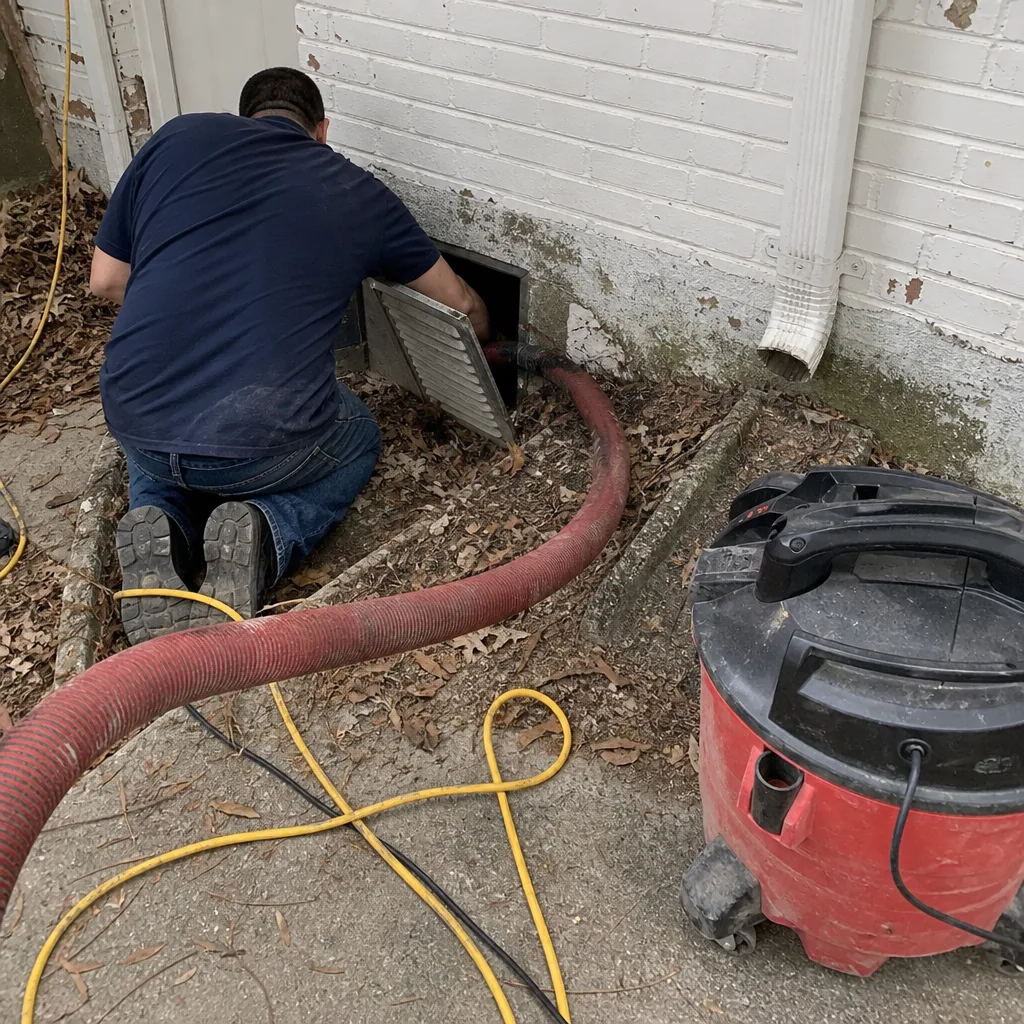
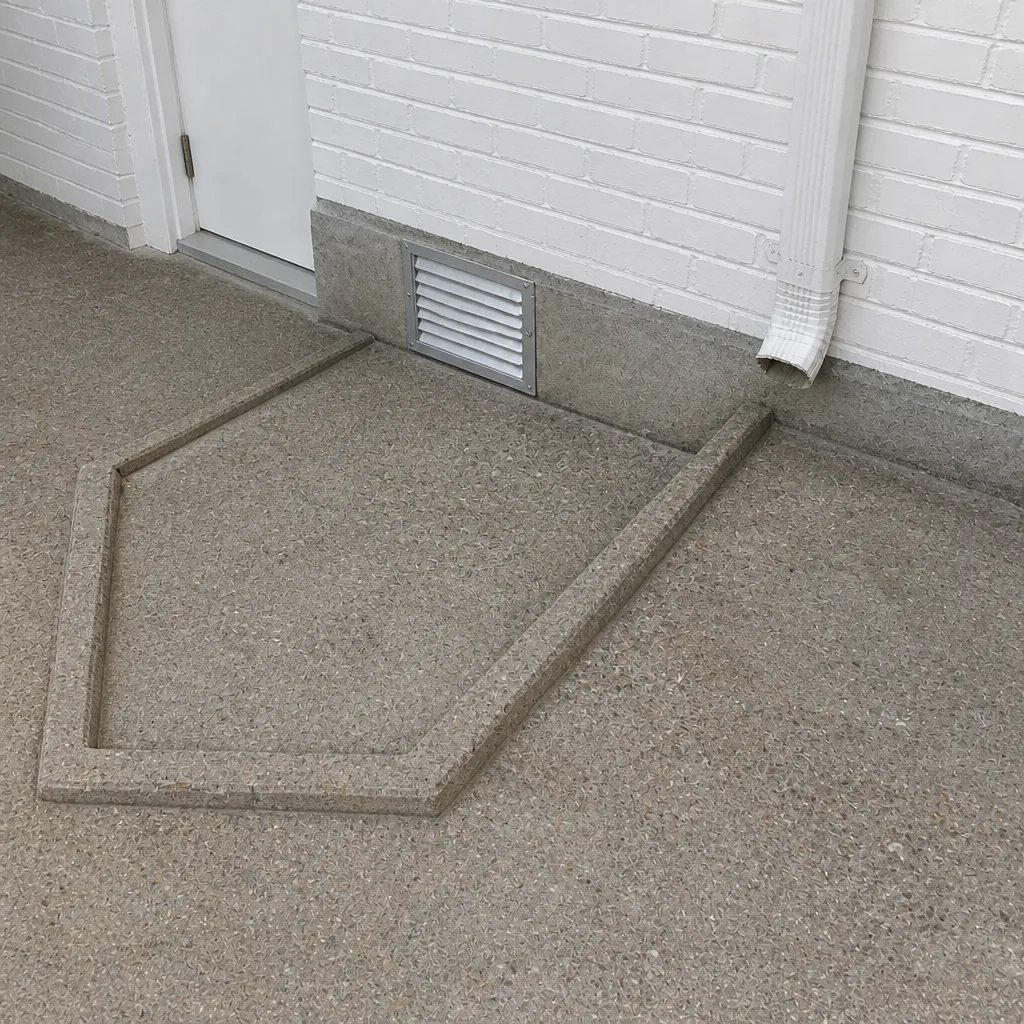
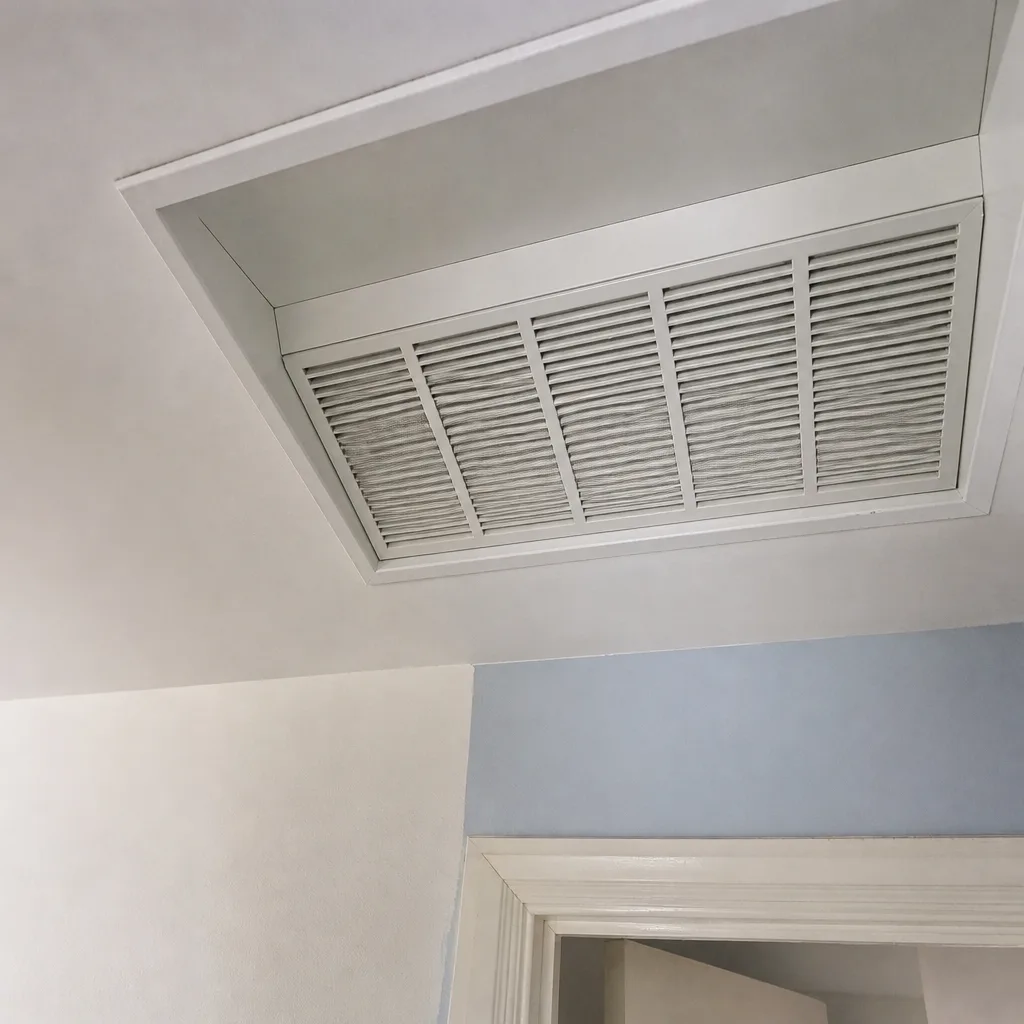
We document the job with before-and-after photos of your own ducts and a post-cleaning inspection, so you see what came out and what the system looks like after. Ask any company to show that documentation before hiring. Call (833) 513-8108 for an estimate.
Yes. Humid outdoor air enters through return-side leaks, and condensation forms on cold duct surfaces in hot attics. The result is moisture in the insulation and growth that circulates through the house. Duct sealing is the fix that stops the intake; sanitizing in late summer addresses what already formed. Call (833) 513-8108 to have the system inspected.
A musty smell when the AC starts usually points to growth in the air handler or duct lining, and professional cleaning with containment and sanitizing is the right treatment. If the smell returns after cleaning, there’s a moisture source that wasn’t sealed. Our technicians have up to 12 years of experience tracing that source, and we can work with your insurer where applicable. Call (833) 513-8108 for a free estimate.
The Bottom Line
Seasonal duct care in Preston Hollow works because the contamination changes with the season: moisture in spring, humidity and growth in summer, oak and pecan debris in fall, heat-set carbon deposits in winter. Build the year around four touchpoints: a spring diagnostic and cleaning, a late-summer sanitizing pass, a fall cleaning for the heavy particulate load, and winter filter and heat exchanger monitoring. Use professional-grade equipment with containment, and get duct repair and sealing done in the same visit as the cleaning. That schedule protects the system and the air you breathe, whatever the month.
Call (833) 513-8108 for a free estimate. We answer 24/7. Fast dispatch from 7am to 7pm, Sunday through Friday. Estimates are free, the price is set per job by the written estimate, and one flat price per system is agreed before work starts.
Written by the team at Air Duct Cleaning Preston Hollow.